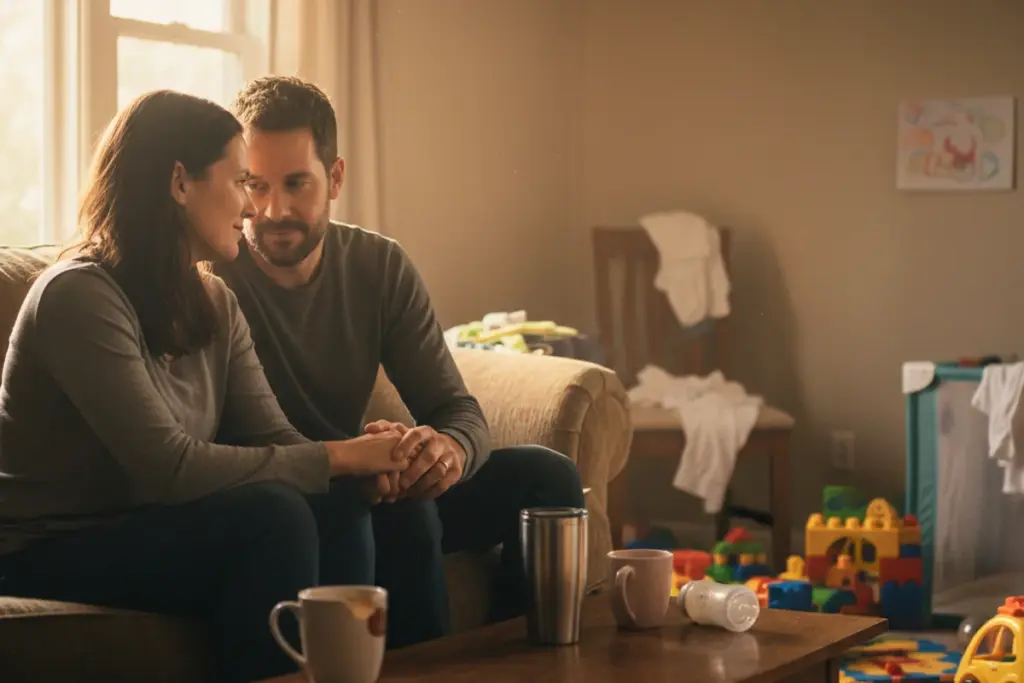



It was 3:47 AM when I found myself crying over a half-empty bottle of formula, my husband snoring on the couch two feet away. Our daughter was finally asleep after two hours of colic-induced screaming, and I was furious. Not at the baby—at him. For sleeping. For not being me. For somehow, impossibly, being “the fun parent” during his thirty-minute evening visits while I handled the other twenty-three and a half hours of survival mode.
That night, I Googled “divorce after baby” at 4 AM. What I found shocked me: 67% of couples experience a significant decline in relationship satisfaction during the first three years of parenthood. I wasn’t broken. We weren’t broken. We were normal—exhausted, disconnected, and drowning in a perfect storm of sleep deprivation, identity loss, and unspoken resentment. The newborn phase isn’t just hard on mothers; it’s brutal on marriages. The question isn’t whether you’ll struggle—it’s whether you’ll find your way back to each other before the damage becomes permanent.
Quick Answer
Marriage problems after baby stem from sleep deprivation, uneven labor distribution, and lost intimacy. Save your relationship by establishing daily 10-minute check-ins, redistributing workload fairly, prioritizing connection over perfection, and using structured conversation prompts to communicate effectively when you’re both running on empty. The first three months are survival mode—give yourselves grace while actively rebuilding your partnership.
The 67% Reality Check: You’re Not Failing, You’re Normal
When researchers study new parents, they don’t find fairy tales—they find fractured partnerships. That 67% statistic represents millions of couples who looked at each other across a changing table and wondered, “Who is this stranger?” The hormones, the sleep debt, the complete restructuring of daily life—it creates a perfect environment for conflict to flourish while communication dies.
But here’s what’s rarely discussed: most couples don’t divorce because of the baby. They drift apart because they stopped being partners and became co-managers of a tiny, demanding CEO. The business of keeping a human alive consumes everything, including the emotional energy you once reserved for each other. Recognizing this pattern is the first step toward interrupting it. You’re not failing at marriage; you’re experiencing an extremely common, well-documented crisis that responds to specific interventions.
The Sleep Deprivation War Zone
Nothing destroys intimacy faster than chronic exhaustion. When you’re running on three hours of fragmented sleep, your brain’s prefrontal cortex—the part responsible for empathy, patience, and rational conflict resolution—essentially goes offline. You become reactive, irritable, and incapable of the emotional generosity that healthy relationships require.
The solution isn’t finding more sleep (impossible with a newborn) but managing expectations around it. Acknowledge that you’re both operating at reduced capacity. Create a “no serious conversations after 9 PM” rule. Tag-team night feedings so neither partner becomes the “default” parent. Most importantly, stop keeping score. Sleep deprivation makes martyrs of us all, but scorekeeping destroys teamwork. You’re on the same side, even when it doesn’t feel like it.
The Invisible Labor Crisis
“Just tell me what to do” might be the most infuriating phrase a new mother hears. Mental load—the invisible work of noticing, planning, and remembering—is exhausting, and it’s rarely distributed evenly. One partner becomes the manager; the other becomes the helper. Resentment builds like plaque in arteries, silently blocking the flow of goodwill.
Address this by externalizing the mental load. Create shared documents for pediatrician questions, feeding schedules, and supply inventories. Hold weekly “operations meetings” to redistribute tasks. But the real game-changer? DeepDialogue’s structured prompts that surface these tensions before they explode. When you’re too tired to initiate difficult conversations, having pre-written questions eliminates the mental gymnastics of figuring out how to start.
Rebuilding Intimacy Without Expecting Perfection
Physical intimacy often disappears after birth—for medical reasons, exhaustion, or simply because you can’t remember the last time you felt like a sexual being rather than a milk machine or diaper-changing service. But intimacy isn’t just sex; it’s connection, touch, and being seen as a person rather than a parent.
Start with non-sexual intimacy: holding hands during Netflix, a ten-minute shoulder massage, eye contact while talking. These small bridges matter because they rebuild the habit of prioritizing each other. Use conversation prompts to share vulnerabilities you can’t articulate in daily chaos. The goal isn’t returning to your pre-baby relationship—that version of “us” is gone. It’s building something stronger from the wreckage.
The 10-Minute Lifeline That Changed Everything
Our marriage turned around not through therapy (though that’s valuable) or date nights (impossible in month two), but through a daily ritual: ten minutes, same two questions, every single night. “What’s one thing I did today that helped you feel loved?” and “What’s one thing that’s weighing on you right now?”
This isn’t magic—it’s structure. New parents don’t need more advice; they need frameworks that work when their brains don’t. DeepDialogue provides these frameworks, transforming “we should talk” (overwhelming) into “let’s do tonight’s prompt” (manageable). Ten minutes prevents the resentment snowball from becoming an avalanche. It proves you’re still choosing each other, even when choosing feels impossible.
Conclusion: Survival Mode Ends, But the Foundation Remains
The newborn phase is temporary; the patterns you establish during it are not. Every couple who survives with their marriage intact will tell you the same thing: they actively chose connection when passively accepting distance would have been easier. They asked questions when silence felt safer. They gave grace when resentment felt justified.
Your marriage doesn’t have to become another statistic. The questions that saved ours are available to you—structured, tested, designed for exhausted parents who still want to find their way back to each other. Start with ten minutes. Start tonight. The newborn phase will end, but the partnership you’re building will last long after the night feedings stop.