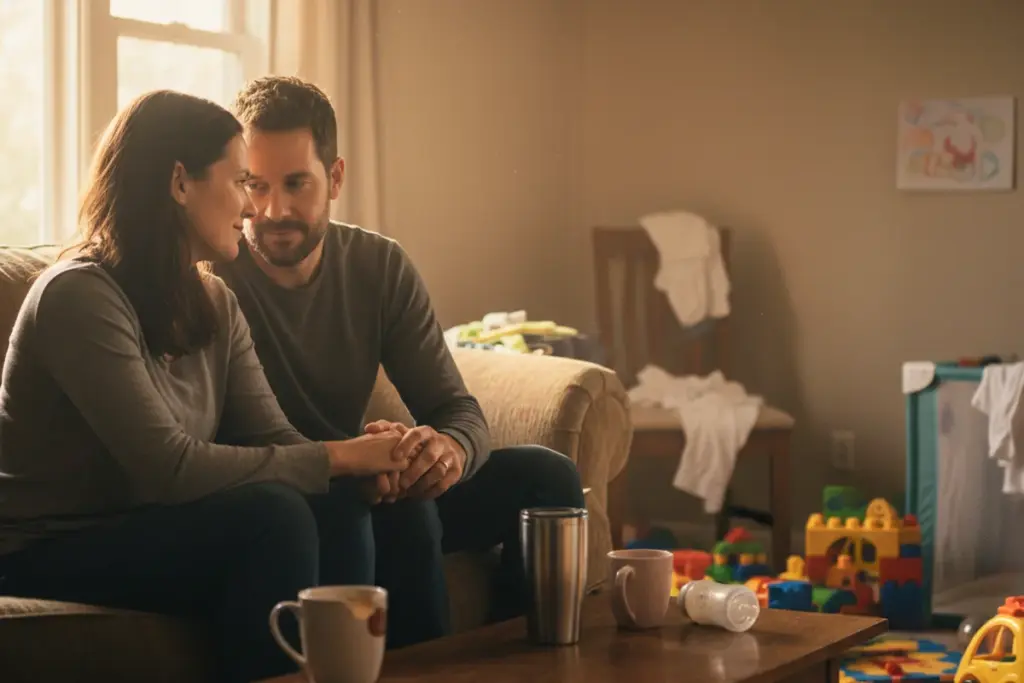



When a new baby arrives, everyone talks about the mother-baby bond. And rightfully so — that connection is profound and life-changing. But what about dad? Many fathers describe feeling like a spectator in those early weeks and months. Mom seems to know exactly what the baby needs, and dad feels like he’s just fumbling through, hoping not to mess anything up.
If you’re a father who feels sidelined, you’re far from alone. Research consistently shows that many dads struggle with feeling disconnected from their newborns. The good news? That bond isn’t something you either have or don’t — it’s something you build, one small moment at a time.
Why Dads Often Feel Left Out
There are real, structural reasons why fathers can feel like outsiders during the newborn phase. Understanding them doesn’t excuse the problem, but it does help you work through it without self-blame.
Biology plays a role that’s hard to overstate. Mothers who breastfeed have hours of built-in skin-to-skin contact every day. That physical closeness releases oxytocin — the bonding hormone — in both mom and baby. Dad doesn’t get that same hormonal head start. And if mom is breastfeeding exclusively, the feeding relationship naturally becomes a duo that dad can feel excluded from.
Social expectations compound the issue. Even in progressive households, there’s often an unspoken assumption that mom is the “default parent.” Well-meaning relatives hand the baby back to mom when she fusses. Friends direct their questions about the baby to her. Over time, these patterns create a self-reinforcing cycle: mom becomes more confident because she gets more practice, and dad gets less practice because he feels less confident.
How Do Fathers Actually Build a Bond With a Newborn?
The short answer: through consistent, repeated, one-on-one time. There’s no shortcut, but there are proven strategies that make that time more meaningful.
Skin-to-Skin Contact Isn’t Just for Moms
Also called kangaroo care, skin-to-skin contact involves placing your bare-chested baby against your chest. Studies published in Pediatrics and other journals show that dads who do skin-to-skin experience the same oxytocin surge that breastfeeding mothers do. It regulates the baby’s temperature, heart rate, and breathing — and it tells your newborn’s brain: “This person is safe.”
Claim Your Own Rituals
Bath time. The bedtime story. The morning walk. When you own a specific ritual, your baby learns to anticipate you. Predictability builds trust, and trust builds attachment. It doesn’t have to be elaborate — a ten-minute bedtime routine performed consistently is worth more than a sporadic hour of interaction.
Be the One Who Shows Up at 3 AM
Yes, it’s exhausting. But those middle-of-the-night moments are bonding gold. When your baby cries and you’re the one who responds, you become a reliable source of comfort. If your partner is breastfeeding, you can still be the one who does the diaper change, the burping, or the settling back to sleep. Every time you show up, you’re telling your baby: “I’m here.”
The Partner’s Role: Making Space for Dad
This is the part that doesn’t get said enough: partners play a crucial role in whether a father feels welcome in the newborn’s world. It’s not about stepping back — it’s about making room for both of you to step in.
If you’re the birthing parent, resist the urge to micromanage. When dad puts the onesie on backwards, let it go. When he takes an extra two minutes to soothe the baby, give him those minutes. Hovering, correcting, or taking the baby back mid-soothe sends a clear message: “You’re not doing it right, let me handle it.” That message is devastating to a new father’s confidence.
As we explored in when one parent is the default, the pattern of one parent becoming the “expert” doesn’t just affect household labor — it erodes the other parent’s bond with the child.
When the Feeling Goes Deeper
Sometimes “feeling left out” is more than a temporary adjustment. Postnatal depression affects fathers too — research suggests up to 10% of new dads experience it. If you’re feeling persistently numb, withdrawn, irritable, or hopeless, don’t chalk it up to sleep deprivation. Talk to your doctor. Paternal postnatal depression is real, treatable, and nothing to be ashamed of.
Similarly, if your partner is struggling with postpartum depression, your role shifts in ways that can make bonding even harder. You may become the household manager, the emotional anchor, and the crisis responder all at once — leaving little room for tenderness. For more on this dynamic, see our article on the first fight after baby, which addresses how early stress reshapes relationships.
What Connection Actually Looks Like
Bonding with a newborn isn’t dramatic. It’s not a movie moment where you lock eyes and the orchestra swells. Real connection is quieter and more ordinary than that.
It’s the way your baby calms when they hear your voice. The way they turn toward you in a room full of people. The way their breathing steadies when you hold them close. These small, incremental signs are the real deal — and they accumulate over weeks and months, not hours.
Don’t wait for a grand gesture. Pick up your baby. Hold them. Talk to them about nothing. Sing badly. Make faces. Be ridiculous. The bond you’re building is made of these ordinary moments, stacked one on top of another, until one day you realize: this tiny person knows you, trusts you, and loves you. And you feel exactly the same way.