


Why Bedtime Becomes a Battleground
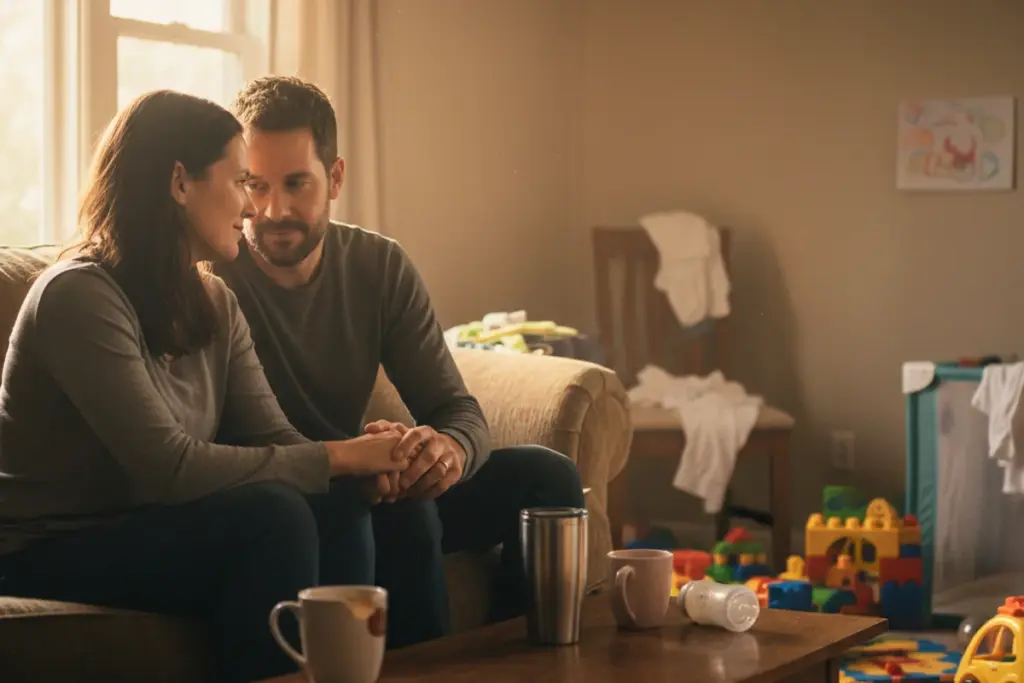
When the clock strikes seven and the house finally quiets, many parents breathe a sigh of relief. But for some couples, the bedtime routine is where the real fight begins — not with the toddler, but with each other. One parent believes in strict schedules and early lights-out. The other thinks a little flexibility won’t hurt. One co-sleeps out of exhaustion; the other resents every night spent dodging tiny elbows.
Bedtime isn’t just about getting a child to sleep. It’s a mirror reflecting your deepest beliefs about discipline, comfort, boundaries, and love. And when those beliefs collide, the result is often resentment that spills into every other corner of the relationship.
Why Do Couples Fight So Much About Sleep?
Because sleep routines touch on core parenting values. The parent who enforces a strict bedtime often sees themselves as the responsible one — the one holding the line. The parent who’s more flexible may feel criticized for being “too soft” or “too chaotic.” Neither is wrong, but both feel misunderstood.
Sleep deprivation makes everything worse. When you’re running on four hours of interrupted rest, patience evaporates. A disagreement about whether to let the baby cry it out becomes a referendum on your entire partnership.
Four Common Bedtime Conflicts
Understanding the specific flashpoints can help you step out of the fight and into a conversation. Here are the four most common bedtime battlegrounds couples face.
1. Consistency vs. Flexibility
One parent treats the bedtime routine like a sacred ritual — same time, same steps, same order, every single night. The other parent adapts based on the day: later bedtime on weekends, an extra story when the child is upset, skipping bath time when everyone’s exhausted. The structured parent sees inconsistency as the root of every sleep problem. The flexible parent sees rigidity as the reason bedtime feels like a prison sentence.
The truth is that children benefit from both predictability and parental warmth. A routine that’s so rigid it ignores a child’s emotional state isn’t better than one that bends when needed — and a routine that bends so much it disappears isn’t a routine at all.
2. Co-Sleeping vs. Independent Sleep
This is one of the most emotionally charged disagreements. One parent may have grown up in a family bed and see co-sleeping as natural and comforting. The other may value independence and worry about creating habits that are hard to break. Add cultural expectations, family opinions, and sheer physical exhaustion to the mix, and you’ve got a conflict that feels impossible to resolve.
The key question isn’t “what’s objectively right?” — it’s “what works for our family, and are we both genuinely okay with it?” If one parent is secretly resentful of the sleeping arrangement, that resentment will leak into the relationship regardless of what the sleep books say.
3. Who Handles the Night Wakings
In many households, one parent becomes the default night-time responder. Sometimes it’s practical — one parent works earlier, one parent breastfeeds. But often it’s an invisible assumption that becomes a burden. The default parent burns out. The other parent feels shut out or useless. Neither talks about it until someone explodes at 3 AM over a dropped pacifier.
If night wakings are falling disproportionately on one person, addressing the invisible labor divide isn’t just a daytime conversation — it’s essential for nighttime peace too.
4. Screen Time and Wind-Down Rules
One parent lets the child watch a show to decompress before bed. The other insists on screens off an hour before sleep. One reads three chapters; the other says one book, done. These small disagreements compound when each parent feels their approach is being undermined by the other.
How to Find Common Ground
You don’t need to agree on every detail. You need a plan that both of you can commit to — even if it’s not your ideal version. Here’s how to build one.
Start with Shared Goals, Not Debates
Before arguing about whether bedtime should be 7:00 or 7:45, ask each other: “What do we both want for our child at bedtime?” Usually the answer is the same — a child who falls asleep calmly, stays asleep most of the night, and wakes up rested. When you start from shared goals, the details become negotiation points, not moral judgments.
Write Down the Routine — Together
Confusion breeds conflict. Sit down when you’re both calm (not at 8 PM when the toddler is screaming) and write out the bedtime routine step by step. Bath, pajamas, story, song, lights out. Include the non-negotiables and the flexible parts. Post it somewhere visible. When both parents follow the same script, the child gets consistency and neither parent feels undermined.
Take Turns, and Mean It
Alternate nights handling bedtime if possible. Not “I’ll do it tonight because you look tired” — actual scheduled turns. This gives each parent experience with the routine, prevents one person from becoming the only one who can put the child to bed, and ensures both parents share the emotional and physical labor of bedtime.
If one parent’s schedule makes alternating impossible, find another way to balance — maybe one parent handles bedtime while the other handles morning routine. Asking for help isn’t weakness; it’s the foundation of sustainable parenting.
When You Need More Than a Conversation
Sometimes bedtime conflicts are symptoms of deeper relationship issues. If every night ends in an argument, if one parent feels consistently overridden, or if you’re stuck in a cycle of conflict that started after your baby arrived, it may be time to bring in a professional. A family therapist can help you untangle the values underneath the bedtime fights and create a plan that respects both parents’ perspectives.
The Bigger Picture
Bedtime battles aren’t really about bedtime. They’re about two people trying to do right by their child while holding different maps of what “right” looks like. The goal isn’t for one parent to win — it’s for your child to feel secure because their parents are a team, even when they disagree.
Start tonight. Sit down after the kids are asleep (ironic, we know) and ask each other: “What does a good bedtime look like to you?” Listen without defending. Then build something together. Your relationship — and your child’s sleep — will thank you.