


When “Mom” or “Dad” Replaces Your Name
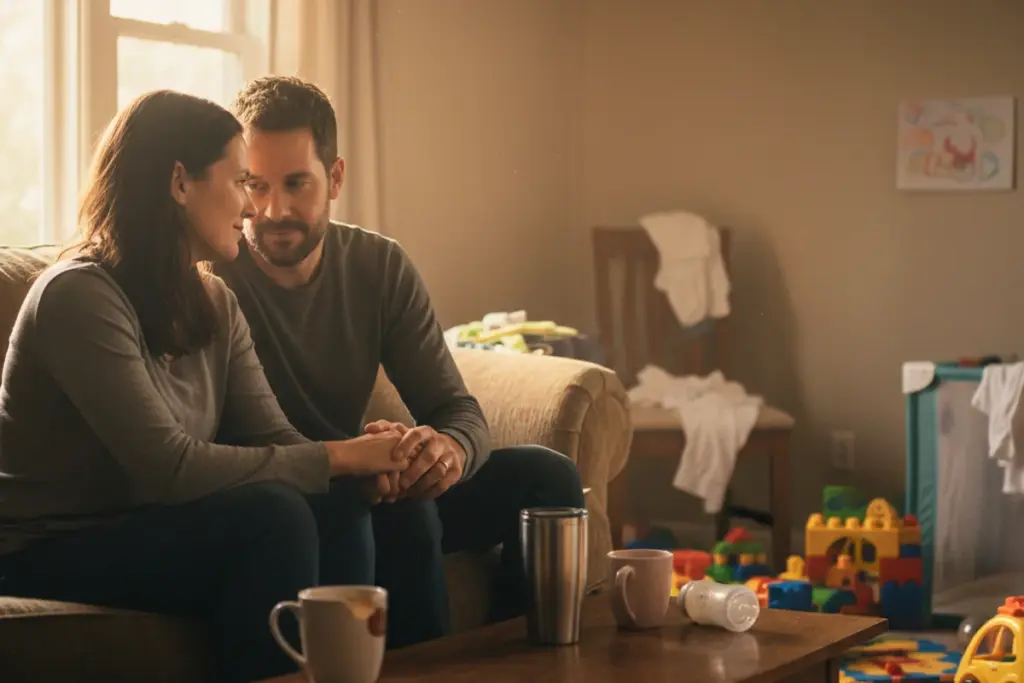
Before kids, you had a name. You had hobbies, opinions, a sense of humor that was distinctly yours. You were a partner, a friend, a professional — someone with edges and interests that had nothing to do with anyone else. Then parenthood arrived, and slowly, almost invisibly, “your name” got replaced. You became “Mom” or “Dad” to everyone around you — and worst of all, sometimes to yourself.
Losing your identity after becoming a parent is one of the most common and least discussed challenges of early parenthood. It doesn’t make you a bad parent. It makes you human. And the good news is that you can be a devoted parent and a whole person — but it takes intention.
How Does Identity Loss Actually Show Up?
It rarely announces itself. Instead, it shows up in quiet moments — scrolling past a hobby group you used to love, declining invitations because you can’t remember what you’d talk about, feeling a jolt of surprise when someone asks what you do for fun. It sounds like “I don’t have time for that anymore” when what you really mean is “I don’t know who I am without the kids needing me.”
Identity loss after kids isn’t just about losing free time. It’s about losing the narrative you told yourself about who you are. When your entire day revolves around feeding, soothing, coordinating, and managing another human’s needs, the parts of you that used to feel alive can go quiet — not because they’re gone, but because they’ve been buried under an avalanche of responsibility.
Why It Happens — and Why It’s Not Your Fault
Society doesn’t help. From the moment you announce a pregnancy, the world shifts its lens. Every question becomes about the baby. Every conversation circles back to the child. Your identity as a parent is celebrated, reinforced, and expected — while your identity as an individual quietly fades into the background.
For mothers especially, the pressure is relentless. The cultural script says that good mothers are selfless, always available, always putting their children first. Any expression of individual need is framed as selfish. For fathers, the script often minimizes the identity shift entirely, leaving them struggling in silence when they feel adrift.
The invisible mental load compounds the problem. When your brain is a constant loop of appointments, preferences, school deadlines, and emotional weather forecasts for tiny humans, there’s no bandwidth left for your own inner life. You don’t lose yourself because you’re weak — you lose yourself because you’re carrying too much to hold onto who you were.
Five Signs Your Identity Needs Attention
Recognizing the problem is the first step. Here are five signs that you’ve lost more of yourself than you intended.
1. You Can’t Remember What You Enjoyed Before Kids
When someone asks “What do you do for fun?” and your mind goes blank — not because you’re tired, but because you genuinely can’t remember — that’s a signal. The things that lit you up haven’t disappeared; they’ve just been buried under years of putting everyone else first.
2. You Feel Guilty When You’re Not Parenting
Taking a walk alone, going to a class, reading a book that isn’t about child development — if every moment away from your kids triggers guilt, your identity has become inseparable from your parenting role. This guilt is learned, not natural, and unlearning it is essential for your wellbeing.
3. Your Conversations Are 100% About the Kids
If every conversation with your partner, your friends, or your family circles back to the children within two minutes, your world has narrowed. It’s natural for kids to dominate conversation — they’re a huge part of life. But when there’s nothing else left, the relationship suffers. Couples who only talk about co-parenting often wake up years later wondering where their connection went.
4. You’ve Abandoned All Your Pre-Parent Hobbies
Not paused — abandoned. You didn’t put your guitar in the closet “for now,” you sold it. You didn’t take a break from running, you stopped identifying as someone who runs. There’s a difference between adjusting your interests for a new season and erasing them entirely.
5. You Feel Like You’ve Disappeared
The most painful sign. You look in the mirror and don’t recognize the person staring back. Not because of physical changes — because the person inside feels like a ghost of who they used to be. This isn’t vanity. This is identity grief, and it deserves attention.
Reclaiming Yourself — Practical Steps
You don’t need a weekend retreat or a personality overhaul. You need small, consistent actions that reconnect you with the person you were before parenting swallowed your identity.
Start with a 20-Minute Identity Audit
Set a timer. Write down everything you loved doing before kids — not what you think you should love, but what actually lit you up. Don’t judge the list. Painting, rock climbing, arguing about politics, baking, binge-watching terrible reality TV — it all counts. This list is your map back to yourself.
Reclaim One Thing This Week
Pick one item from your list. Not the most impressive one — the one that makes your chest feel warm when you think about it. Schedule 20 minutes for it this week. Tell your partner: “I need 20 minutes on Thursday to do something for me.” This isn’t selfish. This is maintenance. You can’t pour from an empty cup, and asking for the space to refill is an act of strength.
Talk to Your Partner About Identity, Not Just Logistics
Most couples talk about schedules, logistics, and kid problems. When was the last time you asked each other: “What’s been exciting you lately?” or “What do you miss about who you were before?” These conversations aren’t indulgent — they’re the difference between surviving parenthood together and growing through it together.
The Myth of Selfish Parents
Let’s name the fear that holds most parents back: the belief that prioritizing your own identity makes you a selfish parent. It doesn’t. Children benefit enormously from parents who are fulfilled, engaged, and modeling what a whole life looks like. When kids see their parents pursue interests, maintain friendships, and set boundaries around personal time, they learn that adulthood includes caring for yourself — not just others.
The most resilient families aren’t the ones where parents sacrifice everything. They’re the ones where parents stay whole enough to show up with energy, creativity, and genuine presence. Your identity isn’t a luxury — it’s the foundation everything else is built on.
Starting Today
You don’t need to overhaul your life. You need one small moment of reconnection with yourself — today. Open that book you abandoned. Text that friend you haven’t spoken to in months. Go for a run, even if it’s just around the block. Say out loud: “I am more than a parent.” Not because parenting isn’t enough — because you deserve to be enough for yourself, too.